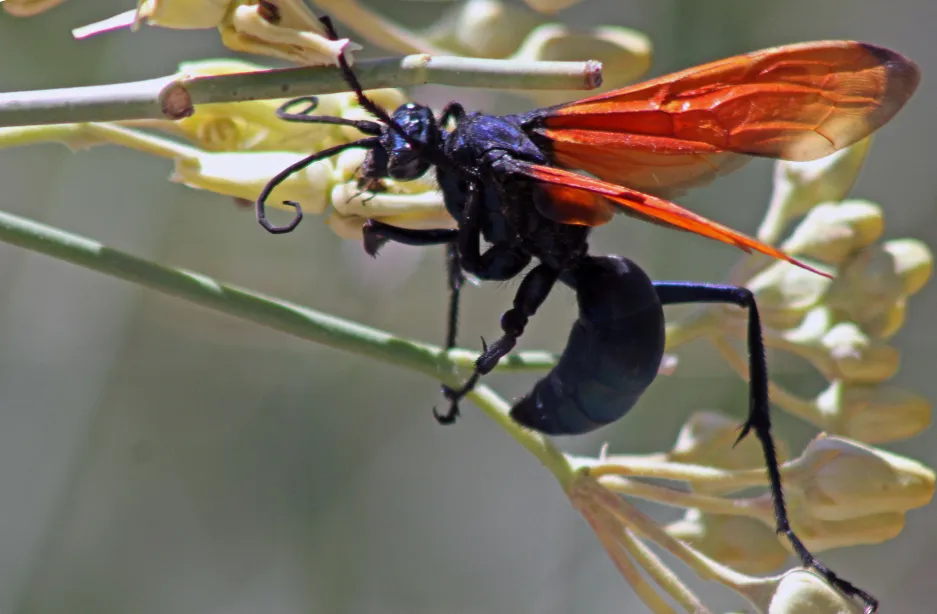
What is a Blue Tarantula Hawk Wasp
The blue tarantula hawk wasp, a striking insect often encountered in the southwestern United States and parts of South America, is a remarkable creature. Known for its iridescent blue-black body and rust-colored wings, this wasp is a member of the Pompilidae family. The blue tarantula hawk is not just visually stunning, but also possesses a fearsome reputation due to its painful sting, which ranks among the most excruciating stings in the insect world. These wasps play a vital role in the ecosystem as predators, specifically targeting tarantula spiders, which they paralyze and use as hosts for their larvae. Their presence in an environment can be an indicator of a healthy ecosystem where both the wasps and their prey thrive. Understanding these fascinating creatures involves delving into their appearance, habitat, and, of course, the infamous pain they inflict.
Appearance and Identification
Identifying the blue tarantula hawk wasp is relatively straightforward due to its distinctive appearance. The body is typically a deep, metallic blue or black, and the wings have a rusty orange or brown hue. They are robust wasps, often measuring up to two inches in length. Their physical build allows them to handle the tarantulas they prey upon. Their strong legs and mandibles assist in both hunting and manipulating their prey. Look for these characteristics to distinguish them from other wasp species. The vibrant coloration serves as a warning to potential predators, signaling the potency of their sting. Observing them in their natural habitat is a treat, as their colors gleam in the sunlight.
Habitat and Distribution
The blue tarantula hawk wasp thrives in warm, arid climates. Their primary habitats include the southwestern United States, specifically states like Arizona, New Mexico, and Texas, and extend into parts of South America. They prefer areas with sparse vegetation and sandy or rocky soils where tarantulas are abundant. These wasps are solitary creatures, and their nests are typically found in the ground or in pre-existing burrows. The distribution of these wasps correlates directly with the presence of their primary prey, tarantulas. Therefore, areas with high tarantula populations are often buzzing with these stunning insects. They are not typically found in highly populated or urban areas, preferring the relative isolation of deserts and open landscapes.
The Pain Index
The pain associated with a sting from a blue tarantula hawk wasp is legendary, often described as one of the most painful insect stings imaginable. The experience is often compared to being electrocuted, a searing and intense sensation that can incapacitate a person for several minutes. Unlike the sting of a bee or a yellow jacket, the pain from a tarantula hawk wasp is not typically accompanied by significant swelling or allergic reactions. However, the intensity of the pain itself is what earns it a spot near the top of the Schmidt Sting Pain Index, a scale devised by entomologist Justin O. Schmidt to rate the relative pain caused by different insect stings. The venom is injected directly into the nervous system, causing an immediate and excruciating response.
Fact 1 Intense Sting
The most well-known fact about the blue tarantula hawk wasp is undoubtedly its incredibly painful sting. While the sting itself is not typically life-threatening to humans, the level of pain is almost unmatched in the insect world. The venom contains a complex cocktail of neurotoxins that affect the nervous system. The wasp uses its sting to paralyze tarantulas, but can also use it defensively if threatened by humans or other animals. Once stung, the intense pain can last for several minutes, often leaving the victim incapacitated and unable to think clearly. It’s a truly unforgettable experience, and for those who have experienced it, the memory lingers long after the pain subsides. It is recommended to avoid provoking them or disturbing their activities.
The Schmidt Pain Index

The Schmidt Sting Pain Index, a scientific scale developed to assess the relative pain of insect stings, places the blue tarantula hawk wasp near the top. The index rates the pain on a scale of 1 to 4, with a score of 4 representing the most excruciating pain. The tarantula hawk wasp sting rates a solid 4, categorized as a “blinding, fierce, shockingly electric” experience. This classification reflects the unique quality of pain, which is less about the physical reaction (like swelling) and more about the pure intensity and impact on the nervous system. The index, created by entomologist Justin Schmidt, provides a fascinating and often humorous insight into the world of insect stings, allowing for comparisons and a better understanding of the diverse ways insects defend themselves.
What to Do if Stung
If stung by a blue tarantula hawk wasp, the immediate response should be to remain calm and try to find a safe place to sit or lie down. While the pain is intense, it usually subsides within a few minutes. There is no specific antidote for the sting, but standard first aid can help manage symptoms. It is advisable to avoid touching the sting area as it doesn’t typically cause any swelling. Some individuals may find that applying ice packs or taking over-the-counter pain relievers can ease the discomfort. It’s important to monitor for any unusual symptoms, although severe allergic reactions are rare. Seeking medical attention is typically not necessary unless symptoms worsen or persist longer than a few minutes. After the initial pain subsides, the focus should be on rest and recovery.
Fact 2 Predatory Behavior
The blue tarantula hawk wasp is a specialized predator, primarily preying on tarantula spiders. The wasp’s predatory behavior is a remarkable display of instinct and precision. These wasps meticulously seek out tarantulas, often locating them in their burrows or hunting them in the open. Once a tarantula is found, the wasp carefully maneuvers to sting the spider, delivering a paralyzing venom. The wasp is not simply hunting for food. The tarantula is used as a host for the wasp’s larvae, showcasing a unique and intricate predator-prey relationship. This interaction highlights the intricate balance within the ecosystem and the specialized adaptations of both the predator and the prey. Their hunting strategy is a crucial component of their survival, ensuring the continuation of their species.
Tarantula Hunting

The hunt for a tarantula is an extraordinary sight to behold. The wasp will actively search for a tarantula, using its keen senses to locate the spider. The process can be a prolonged and meticulous effort, as the wasp navigates through the terrain, often probing burrows and crevices where tarantulas might be hiding. Once a tarantula is spotted, the wasp must overcome the spider’s defenses, which include its fangs and defensive hairs. The wasp must employ stealth and precision to avoid being bitten or having its wings tangled in the spider’s hairs. The hunting behavior includes a delicate dance of approach, assessment, and a strategically placed sting. The success of the hunt is paramount for the wasp’s survival and reproductive success.
Paralyzing the Prey
Once the tarantula is located, the blue tarantula hawk wasp engages in a complex sequence to paralyze its prey. The wasp will carefully position itself to avoid the spider’s fangs, then precisely sting the tarantula in a vulnerable location, such as the underside of the abdomen or the legs. The venom injected is a powerful neurotoxin that swiftly paralyzes the spider, rendering it immobile. This paralysis is crucial; it keeps the tarantula alive but unable to move, allowing the wasp to prepare the spider as a host for its offspring. The wasp often drags the paralyzed tarantula to a burrow, where the wasp lays a single egg on the spider’s abdomen. The tarantula remains alive but motionless throughout this process.
Fact 3 Life Cycle
The life cycle of the blue tarantula hawk wasp is intimately tied to its relationship with the tarantula spider. It’s a fascinating journey from egg to adult, marked by the predator-prey dynamics that define this species. The entire process, from the egg-laying to the development of the larvae, is a testament to the complexity of the natural world. The cycle typically starts with the female wasp paralyzing a tarantula and dragging it to a burrow. She lays a single egg on the spider’s abdomen, and once the egg hatches, the larval stage begins. The larva feeds on the living but paralyzed spider, eventually transforming into a pupa. Finally, the adult wasp emerges, ready to repeat the cycle.
The Egg Laying Process

After paralyzing a tarantula, the female blue tarantula hawk wasp undertakes the crucial task of laying her eggs. This process is carefully executed, as the success of the next generation depends on it. The wasp will drag the paralyzed tarantula to a safe location, often a burrow or sheltered area. She then deposits a single egg on the spider’s abdomen. The egg is strategically placed; it needs to remain secure and accessible for the larva when it hatches. The placement is carefully chosen to ensure that the larva can begin feeding on the spider immediately. This delicate process reflects the wasp’s instinctual knowledge of its role in the life cycle.
Larval Stage and Development
Once the egg hatches, the larval stage of the blue tarantula hawk wasp begins. The larva is a small, grub-like creature that attaches itself to the paralyzed tarantula. It begins feeding on the spider, consuming it slowly. The larva meticulously avoids vital organs, ensuring the tarantula stays alive for as long as possible. As the larva grows, it molts several times. The spider provides a consistent food source, enabling the larva to develop fully. This stage lasts several weeks, during which the larva undergoes significant growth. The larva then spins a cocoon, pupates inside, and transforms into an adult wasp.
Fact 4 Defensive Strategies
The blue tarantula hawk wasp has a series of defensive strategies that help it survive in its environment, beyond its infamous sting. These defenses are critical for its survival and allow it to maintain its predatory lifestyle while minimizing its own risks. The combination of its stinger, warning coloration, and other behavioral adaptations makes it a formidable creature. These strategies show the delicate balance between predator and prey, allowing the wasp to thrive in challenging conditions. The defense mechanisms are essential for its survival and provide the wasp with a unique advantage in its environment.
Stinger as a Weapon

The stinger of the blue tarantula hawk wasp is its primary weapon of defense. The stinger is sharp and capable of injecting a potent venom. The sting can paralyze tarantulas and inflict extreme pain on humans, effectively deterring potential predators. The stinger is a vital part of the wasp’s survival. The venom is designed to disrupt the nervous systems of its targets, making it difficult for them to mount an attack. The stinger also acts as a precise tool. The wasp can target vulnerable areas and quickly deliver the venom, making it a highly effective defense. The wasp utilizes its stinger when it perceives a threat or needs to defend itself or its nest.
Warning Coloration
The vibrant coloration of the blue tarantula hawk wasp serves as a warning to potential predators. The iridescent blue-black body and rust-colored wings are a form of aposematism, which means they signal to others, “I am dangerous.” This warning coloration helps the wasp avoid unnecessary confrontations and reduces the likelihood of being attacked. The bold colors make the wasp easily recognizable, and other animals learn to associate the wasp’s appearance with the painful sting. The visual cues are essential for survival, allowing the wasp to be easily identified and avoided by potential predators. This adaptation offers a clear advantage in the wild, contributing significantly to the wasp’s survival strategy.
Fact 5 Conservation Status
The conservation status of the blue tarantula hawk wasp is generally considered to be of least concern, but it is important to monitor the species due to habitat loss and the impacts of climate change. The population numbers seem stable in its primary habitats, but the wasp’s survival is closely linked to the presence of tarantulas and the preservation of its environment. Conservation efforts focus on maintaining and protecting the natural habitats where these wasps thrive. While the wasp itself is not currently listed as endangered, its survival depends on the health of the ecosystem.
Threats to Survival

The primary threats to the blue tarantula hawk wasp’s survival include habitat loss, pesticide use, and climate change. Deforestation and urbanization are major factors that reduce the availability of its natural habitat. The loss of suitable areas for nesting and hunting can significantly impact the wasp’s ability to thrive. Exposure to pesticides also poses a significant risk, as it can harm the wasps directly or affect their prey, the tarantulas. Climate change can alter the temperature and precipitation patterns in the wasp’s habitat, which might impact tarantula populations, indirectly affecting the wasp. Conservation efforts will need to address these challenges to protect the species’ survival.
Conservation Efforts
Conservation efforts to protect the blue tarantula hawk wasp are focused on habitat preservation and sustainable land management practices. Initiatives include creating and maintaining protected areas where the wasps and tarantulas can thrive. Education and public awareness are essential, informing people about the importance of preserving these insects and their habitats. Supporting sustainable agriculture practices that reduce pesticide use can significantly benefit the wasp population. Citizen science projects, such as monitoring wasp populations and reporting sightings, also contribute valuable data. The combined actions can help maintain the health and biodiversity of the wasp’s habitat and, ultimately, ensure its survival.