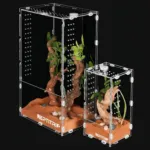
Tarantula Enclosure Top 5 Requirements
Creating the perfect habitat for your tarantula is crucial for its health, well-being, and longevity. A well-designed enclosure replicates the tarantula’s natural environment, providing the necessary elements for it to thrive. Understanding the fundamental requirements is the first step in becoming a successful tarantula keeper. This guide will break down the top five essential requirements, ensuring you provide your eight-legged friend with the best possible living space. From enclosure size to temperature control, we’ll cover everything you need to know to set up a safe and comfortable home for your tarantula. Choosing the right enclosure and providing for your tarantula’s needs doesn’t have to be daunting. By understanding these core requirements, you can create an environment where your tarantula feels secure, allowing it to display its fascinating behaviors and live a long, healthy life. Let’s get started.
Size Matters Choosing the Right Enclosure
One of the most critical factors in tarantula care is the size of the enclosure. A tarantula needs enough space to move around, molt, and feel secure, but too much space can make it feel exposed and stressed. The enclosure size must correspond to the tarantula’s size, age, and terrestrial, arboreal, or fossorial lifestyle. Correct enclosure size promotes healthy growth, reduces stress, and allows your tarantula to exhibit natural behaviors. It is essential to research the specific needs of your species, since an enclosure that is too large can make it more difficult for your tarantula to find food and water, while one too small restricts its movement.
Understanding Tarantula Sizes

Tarantulas range in size from small spiderlings to impressive adults with leg spans exceeding 10 inches. Understanding the size of your tarantula is the first step in determining the correct enclosure size. Spiderlings, especially those under an inch in leg span, can be housed in small deli cups or clear plastic containers. As they grow, they should be transferred to larger enclosures. For adult tarantulas, the enclosure should be at least two to three times the tarantula’s leg span in width and length, with height appropriate for the species (more for arboreal species). Consider the potential adult size of your tarantula when choosing its initial enclosure, as frequent moves can stress the animal. Check the size and growth rate of the species you are planning to own, which will save you the unnecessary hassle of moving the spider and potentially harming it.
Matching Enclosure to Tarantula Type
Tarantulas are classified as terrestrial, arboreal, or fossorial, each with specific enclosure requirements. Terrestrial tarantulas, such as the Chilean rose hair, are ground-dwelling and need more floor space than height. Arboreal tarantulas, such as the pink toe tarantula, live in trees and require vertical space with branches and climbing areas. Fossorial tarantulas, like the Mexican red knee, are burrowers and need deep substrate for digging. Matching the enclosure type to the tarantula’s lifestyle is crucial for its well-being. Ensure the enclosure’s design facilitates the species’ natural behaviors. For arboreal species, include vertical climbing structures. Fossorial species need a thick layer of substrate where they can burrow and create a secure hideaway, while the terrestrials require ample floor space. Choosing the right enclosure type will give your tarantula a chance to express its natural habits and feel at home.
Ventilation The Air Your Tarantula Needs
Proper ventilation is essential for maintaining a healthy environment within the tarantula enclosure. Good ventilation prevents the build-up of stale air, reduces the risk of mold and mildew growth, and helps regulate humidity levels. An enclosure without proper ventilation can lead to respiratory problems for your tarantula and create an unsuitable habitat. Ventilation allows for fresh air to circulate, which reduces the concentration of harmful gases like ammonia, and prevents the enclosure from becoming stagnant. Adequate airflow also plays a role in regulating temperature and humidity, which is vital for your tarantula’s well-being. Understanding the role of ventilation is a core component of providing a safe and healthy environment for your tarantula.
Why Ventilation is Crucial

Poor ventilation can create several problems in a tarantula enclosure. Stale air can harbor bacteria and fungi, increasing the risk of illness. High humidity combined with poor airflow can promote mold and mildew growth, which are detrimental to the tarantula’s health. Condensation buildup can also lead to an unsanitary environment. Adequate ventilation prevents these issues by facilitating air exchange, removing excess moisture, and maintaining a healthy environment. Ventilation ensures the tarantula has access to fresh air, helping to maintain the respiratory health of your pet. Proper ventilation helps regulate humidity, an important factor for some species, ensuring a stable environment that mimics their natural habitat.
Types of Ventilation Systems
Enclosure ventilation systems vary but typically involve strategic placement of air vents. Cross-ventilation, where vents are placed on opposite sides of the enclosure, is often the most effective as it promotes good airflow. Top-vented enclosures work well for arboreal species as they provide good airflow throughout the enclosure. Ensure that vents are small enough to prevent escape but large enough to provide adequate air exchange. Ventilation should be constant, with a slow but steady airflow. Avoid enclosures with limited ventilation, as this can lead to the issues mentioned. When purchasing an enclosure, carefully evaluate the ventilation design, considering the specific needs of the species you plan to house.
Substrate The Foundation of a Healthy Enclosure
The substrate is the bedding material used in the tarantula enclosure, and it serves multiple functions. It provides a comfortable surface for the tarantula to walk on, helps regulate humidity, allows the tarantula to burrow, and contributes to the overall aesthetic of the enclosure. The choice of substrate is crucial for the tarantula’s health and well-being. A well-chosen substrate should be absorbent, non-toxic, and appropriate for the species’ needs. The substrate will also assist in temperature regulation, create a comfortable surface, and assist in the tarantula’s natural behaviors. Choosing the right substrate type and maintaining it properly is an essential part of tarantula care.
Best Substrate Choices

Various substrate options are available, and the best choice depends on the tarantula species. Common options include coconut fiber (coco coir), peat moss, vermiculite, and a mix of these. Coconut fiber is a popular choice because it’s absorbent, readily available, and relatively inexpensive. Peat moss holds moisture well but can be acidic, so it’s often mixed with other substrates. Vermiculite is good for retaining moisture and helps with humidity control. Avoid substrates that are sharp, splinter, or treated with chemicals. The substrate should be natural and free from any additives that could harm your tarantula. Consider the moisture-retention needs of the species, and select a substrate that can meet these needs while maintaining a healthy and safe environment.
Substrate Depth and Maintenance
The depth of the substrate depends on the tarantula species. For burrowing species, a deep substrate is essential for them to dig and create burrows. Terrestrial species typically require a moderate depth, while arboreal species may need a shallower layer. The substrate must be kept clean and maintained regularly. Spot-clean the enclosure by removing waste and leftover food. Replace the substrate entirely every few months, or as needed, to prevent the buildup of bacteria and maintain a healthy environment. Regularly check the substrate’s moisture level and adjust the misting or watering schedule accordingly, so it does not become too dry or too wet, which could harm the tarantula. Monitoring and maintaining the substrate is key to preventing mold and the build-up of harmful bacteria.
Temperature and Humidity
Temperature and humidity are two of the most important environmental factors for tarantula health. These factors must be carefully controlled to mimic the tarantula’s natural habitat and ensure its well-being. Tarantulas are ectothermic, meaning they rely on external sources for temperature regulation. Humidity is critical, as it affects the tarantula’s ability to molt successfully and stay hydrated. Maintaining the correct temperature and humidity levels promotes healthy molting, proper hydration, and overall health. It is essential to regularly monitor these parameters and make adjustments as needed. If you do not know how to maintain the correct temperature and humidity levels for your tarantula, you should research the species and find out exactly what it needs.
Ideal Temperature and Humidity Ranges

The ideal temperature and humidity ranges vary depending on the tarantula species. Most tarantulas thrive in temperatures between 70°F and 85°F (21°C to 29°C). Humidity levels can vary widely, ranging from 60% to 80% or higher for some species. Research the specific temperature and humidity requirements of your tarantula species. Tropical species typically need higher humidity, while desert species require lower humidity. Use a reliable thermometer and hygrometer to monitor the enclosure’s temperature and humidity levels. Provide a heat source, such as a heat mat or a ceramic heat emitter, if necessary, to maintain the correct temperature. Adjust the humidity levels through misting, ventilation, and the type of substrate used. Ensure you know the correct conditions to help your tarantula have the best life possible.
Monitoring and Adjusting Conditions
Regular monitoring is essential to maintain the correct temperature and humidity levels. Check the thermometer and hygrometer daily, and keep a record of the readings. Adjust the conditions as needed to ensure they remain within the ideal range. If the enclosure is too dry, mist the substrate with dechlorinated water or add a water dish. If the enclosure is too humid, improve ventilation. Use a heat source to maintain the correct temperature. If a heat source is used, ensure it is regulated by a thermostat to prevent overheating. By consistently monitoring and adjusting the temperature and humidity, you can provide a stable and healthy environment for your tarantula, promoting its well-being and longevity. Ensure your pet has the best experience possible.
Hiding and Decor The Tarantula’s Sanctuary
Providing hiding places and enriching the enclosure with decor is crucial for a tarantula’s well-being. Tarantulas are naturally shy creatures, and hiding spots give them a sense of security, reducing stress and allowing them to feel safe. Decor enhances the environment, encouraging natural behaviors and providing enrichment. A well-decorated enclosure contributes to the tarantula’s psychological health, making it feel more at home and allowing you to observe its natural behaviors. Creating a suitable and comfortable environment can significantly improve your tarantula’s well-being and is a key element of proper tarantula care. Hiding places and enrichment are just as important as temperature and humidity.
Essential Hiding Spots

Essential hiding spots provide the tarantula with a safe retreat where it can feel secure. Cork bark is a popular choice for terrestrial and arboreal species. It provides a natural shelter and is easy to incorporate into the enclosure. Half logs and artificial caves also make good hiding places. Ensure the hiding spot is appropriately sized for the tarantula. It must be big enough for the tarantula to fit comfortably but small enough to provide a sense of security. Provide multiple hiding spots if space allows, allowing the tarantula to choose its preferred location. Keep the hiding spots stable and away from potential hazards like heat sources. Provide hiding spots to help reduce the stress on your pet, which will make it a much happier tarantula.
Adding Decor and Enhancing the Environment
Adding decor can enhance the environment and stimulate natural behaviors. Use non-toxic decorations that will not harm the tarantula. Artificial plants and branches can be added to arboreal enclosures to provide climbing opportunities. Rocks, driftwood, and other natural elements can add interest and enrich the habitat. Ensure that any decor is securely placed to prevent it from falling and potentially harming the tarantula. Avoid decorations with sharp edges or small parts that could be ingested. The addition of decor not only enhances the enclosure’s appearance but also provides the tarantula with environmental enrichment, which can significantly improve its well-being. Enhancing your tarantula’s environment with decor is a great way to make your tarantula feel at home.