What are Tarantulas
Tarantulas are large, hairy spiders belonging to the Theraphosidae family. They are renowned for their size, often being among the largest spiders in the world. These fascinating creatures are found in various habitats around the globe, captivating the interest of scientists, pet enthusiasts, and anyone curious about the natural world. Despite their intimidating appearance, tarantulas are generally not considered highly dangerous to humans, and their venom is typically less potent than that of many other spider species. Their diverse behaviors, from hunting techniques to molting processes, make them a compelling subject of study and observation, illustrating the remarkable adaptations of arthropods. These spiders play a vital role in their ecosystems, contributing to the balance of insect populations and serving as prey for other animals.
Tarantula Characteristics
Size and Appearance

Tarantulas are characterized by their imposing size and distinctive hairy appearance. Their bodies are divided into two main sections the cephalothorax (fused head and thorax) and the abdomen. The legs are long and covered in sensory hairs, which help them detect vibrations and navigate their environment. Depending on the species, tarantulas can range in size from a few inches to over a foot in leg span, making them truly impressive creatures. Their coloration varies greatly, with some species displaying vibrant hues and intricate patterns, while others are more muted in color, blending seamlessly with their surroundings. The hairs on their bodies are not just for show they also play a role in sensory perception and defense.
Lifespan
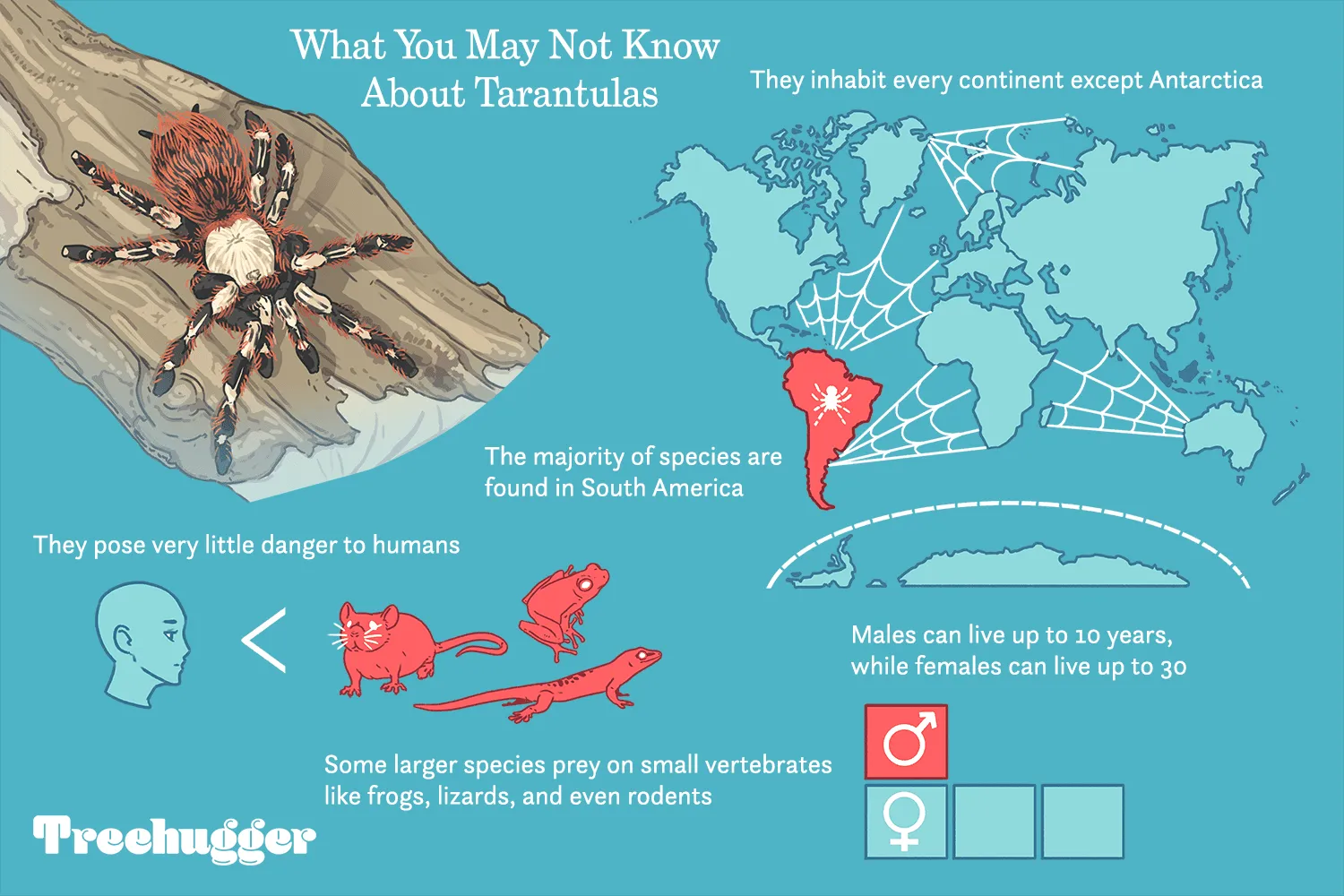
One of the most remarkable facts about tarantulas is their longevity. Female tarantulas, in particular, can live for an incredibly long time, often exceeding 20 years in the wild and sometimes even longer in captivity. This long lifespan is a key factor in their conservation and the reason why they are so popular as pets. Male tarantulas, on the other hand, typically have a shorter lifespan, often only living for a few years after reaching maturity. This difference in lifespan is related to their reproductive strategies and the physiological demands of reproduction on the males. The long lifespan of female tarantulas allows them to reproduce multiple times, ensuring the survival of their species.
Habitat and Distribution
Tarantulas are found in a wide variety of habitats across the globe, from tropical rainforests to deserts and grasslands. Their distribution is primarily in warmer regions, including North and South America, Africa, Asia, and Australia. Each species has adapted to specific environmental conditions, leading to a diverse range of behaviors and physical characteristics. The ability of tarantulas to thrive in different environments showcases their resilience and adaptability. Their presence in these various ecosystems also highlights the importance of conservation efforts to protect their habitats from destruction and preserve their biodiversity. Understanding their habitats is crucial for their protection and care, both in the wild and in captivity.
Where They Live

Tarantulas exhibit diverse lifestyles, with some species being terrestrial, burrowing, arboreal, or a combination of these. Terrestrial tarantulas live on the ground, often under rocks or in self-dug burrows. Burrowing tarantulas are known for constructing elaborate underground tunnels, providing shelter and protection from the elements. Arboreal tarantulas, on the other hand, live in trees, utilizing their claws and hairs to climb and find refuge in the branches. These different lifestyles reflect their adaptation to their environment and influence their hunting and defensive strategies. Observing their natural habitats is essential for understanding their behavior and needs, and for providing proper care in captivity.
Types of Tarantulas
There are hundreds of different tarantula species, each with unique characteristics and adaptations. Some popular types include the Chilean Rose tarantula, known for its docile nature and attractive coloration, and the Goliath Birdeater tarantula, one of the largest spiders in the world. The diversity among tarantula species extends to their habitats, diets, and behaviors. Each species has evolved to fit its specific ecological niche, demonstrating the remarkable adaptability of this group of spiders. The variety in size, color, and behavior makes tarantulas a fascinating subject for study and observation, highlighting the wonders of the natural world.
Tarantula Behavior
Hunting and Diet

Tarantulas are primarily nocturnal hunters, ambushing their prey during the night. They are opportunistic feeders, consuming a variety of insects, small animals, and even other spiders. Their hunting strategy involves waiting for prey to come within range, then swiftly pouncing and injecting venom to immobilize it. This method ensures a high success rate, reflecting their effective adaptation to their environments. The tarantula’s diet varies based on its size, with larger species consuming larger prey, such as small birds, lizards, and rodents. Their role in their ecosystem is that of a predator, controlling the population of insects and small animals.
Venom and Bites
Although tarantulas have venom, it is generally not considered highly dangerous to humans. Their venom is primarily used to subdue their prey, and a bite from a tarantula is often compared to a bee sting in terms of pain and effect. However, individuals may experience localized pain, redness, and swelling at the bite site. Allergic reactions are rare but possible. It’s important to handle tarantulas with care and avoid provoking them. While their bite can be unpleasant, it’s not usually life-threatening. The tarantula’s venom is a complex mixture of toxins, which has been the subject of scientific research due to its potential medical applications. Understanding the venom helps to manage any incidents and minimize risks.
Tarantula Defense Mechanisms
Tarantulas have several defense mechanisms to protect themselves from predators. One of the most common is the use of urticating hairs, which they can flick from their abdomen to irritate the skin and eyes of potential threats. These hairs act as a deterrent, causing discomfort and distraction to predators. They also possess the ability to bite, although this is typically used as a last resort. Some species can also make a hissing sound by rubbing their legs together, a behavior designed to scare away potential attackers. These defense mechanisms are crucial for their survival in the wild.
Molting

Tarantulas, like all arthropods, undergo molting, the process of shedding their exoskeleton to grow. This occurs periodically throughout their lives, and during this time, the spider is particularly vulnerable. The molting process involves the spider creating a new, larger exoskeleton underneath its old one. It then splits open the old exoskeleton and emerges, soft and vulnerable. After molting, the tarantula’s new exoskeleton expands, allowing it to grow larger before the new exoskeleton hardens. This process is vital for growth and development, demonstrating their amazing ability to adapt to their environment and continue thriving.
Reproduction
The reproduction process of tarantulas is an interesting and intricate aspect of their lives. Male tarantulas use specialized structures called pedipalps to transfer sperm to the female. After mating, the female produces an egg sac, which she guards diligently until the spiderlings hatch. The number of spiderlings in a clutch can vary significantly depending on the species. The spiderlings then undergo their own molting cycles as they grow and develop. The reproductive cycle is a crucial part of their life cycle. The care of the egg sacs by the female, ensuring the survival of the next generation, reflects the deep-seated instincts of motherhood.
Tarantulas and Humans
Tarantulas as Pets

Tarantulas are increasingly popular as pets, and there is a huge community of enthusiasts worldwide. They are relatively low-maintenance pets, requiring specific habitat conditions, including appropriate temperature and humidity. Their care involves providing a suitable enclosure, regular feeding, and ensuring proper hygiene. It is important to research the specific needs of a particular species before acquiring one as a pet. The popularity of tarantulas has driven the need for responsible pet ownership, education, and an understanding of their natural needs. They can be fascinating pets, but the owner must commit to providing the best environment.
Conservation Status
While many tarantula species are not currently considered endangered, several are threatened due to habitat loss, over-collection for the pet trade, and other environmental challenges. Conservation efforts focus on protecting their natural habitats, regulating the pet trade, and raising awareness of the importance of these amazing spiders. Education plays a crucial role in conservation. Awareness helps people better understand and appreciate these creatures and support conservation efforts. Promoting sustainable practices is necessary to preserve their populations for the future.